
Healthcare M&A Regulatory Diligence: What Buyers Need to Know
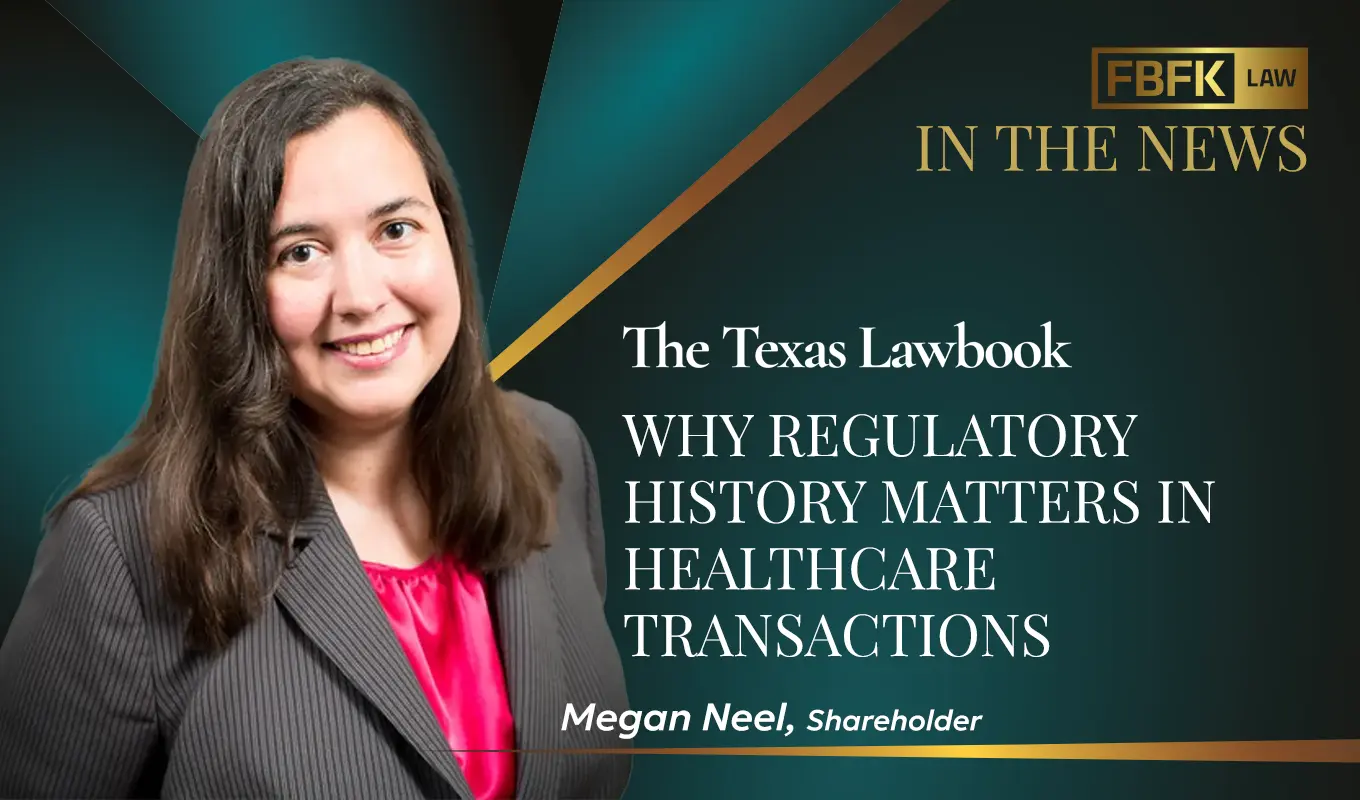
FBFK Law Shareholder Megan Neel recently shared her perspective with The Texas Lawbook on an issue that can have significant implications for healthcare buyers: understanding the regulatory history that comes with an acquisition.
In her article, “What Buyers Are Really Underwriting in Texas Healthcare Deals: Regulatory History,” Megan explains why healthcare M&A diligence requires buyers to look beyond financial performance and current operations.
Physician relationships, MSO arrangements, compensation structures, billing and coding practices, internal compliance findings, privacy safeguards, and cybersecurity practices can all create issues that continue to matter after a transaction closes.
For private equity sponsors, strategic acquirers, physician groups, MSOs, hospitals, and their advisors, that means regulatory diligence is not simply a legal workstream. The findings can influence valuation, transaction structure, indemnities, integration costs, and future exit strategy.
Four Questions for Healthcare Buyers
Megan identifies four questions that can help buyers evaluate the regulatory risk associated with a healthcare transaction:
- What regulatory history are we acquiring? Buyers should examine historical arrangements, audits, investigations, repayment issues, complaints, and internal compliance findings.
- Do the economics match the paperwork? Written agreements should align with how physician compensation, management fees, leases, ownership interests, and other financial relationships operate in practice.
- What did management know, and what did they do? Compliance reviews are only part of the picture. Buyers should also understand what those reviews found and whether appropriate corrective action followed.
- What needs to be addressed after closing? Governance, contracts, billing practices, privacy safeguards, reporting processes, and other operational issues may require immediate attention as part of integration planning.
The broader takeaway is that a healthcare transaction can carry regulatory issues that originated years before the buyer entered the picture. Thorough diligence can help buyers better understand those risks and determine how they should be addressed, allocated, or reflected in the transaction.
Megan is a Board-Certified Health Law attorney who advises healthcare organizations on transactions, regulatory compliance, ownership structures, strategic contractual relationships, and operational risk management.
